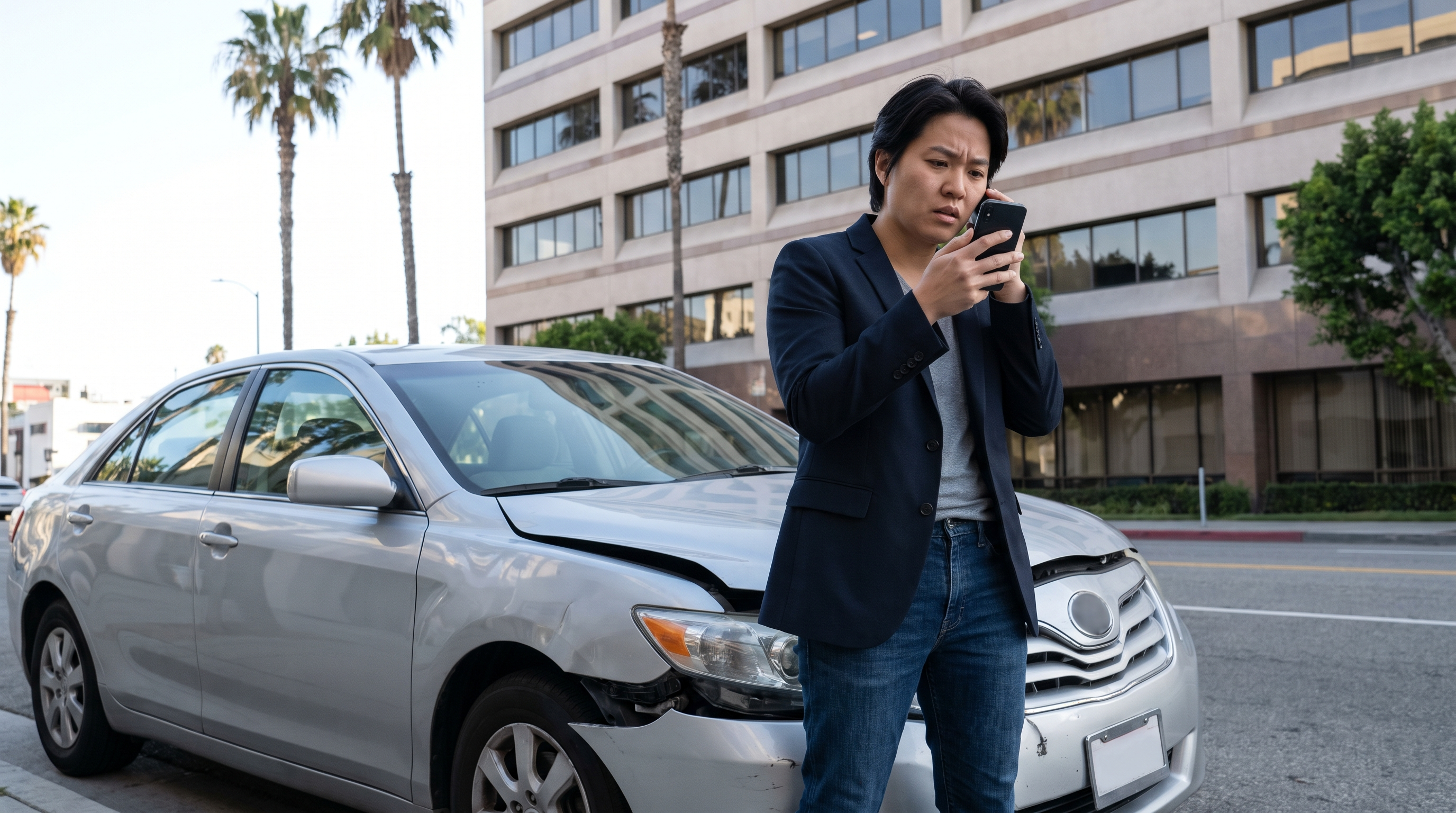
Should I Talk To Insurance After a California Car Accident?
Should I talk to insurance after car accident California searches usually happen within hours of a crash, when the adjuster calls before the injured person knows the medical picture. The safe answer is to report basic facts to your own carrier, but be careful with recorded statements, blame, injury guesses, releases, and broad authorizations.
| Insurance issue | Verified rule or data point | What it means after an LA crash |
|---|---|---|
| Los Angeles crash volume | CHP CCRS 2025 data reported 29,888 Los Angeles crashes, 17,104 injured people, and 329 deaths. | Insurers handle these claims at scale, so your first statement should be accurate and limited. |
| Rear-end crash pattern | CHP CCRS 2025 listed 10,115 rear-end crashes and 6,415 injured people in Los Angeles. | The adjuster may ask about speed, distance, sudden stops, brake lights, and distraction. |
| Side-swipe crash pattern | CHP CCRS 2025 listed 9,105 side-swipe crashes and 2,957 injured people, a 32% injury rate. | Lane position, signals, mirror checks, video, and vehicle damage photos matter. |
| Unfair claims practices | California Insurance Code section 790.03 identifies unfair methods and unfair or deceptive acts in insurance. | Claim handling has rules, but the insurer still protects its insured and its own file. |
| DMV accident report | California DMV's accident reporting page points drivers to the SR-1 process after qualifying crashes. | Reporting duties are separate from giving a recorded statement to the other insurer. |
| Injury lawsuit deadline | California Code of Civil Procedure section 335.1 gives two years for many injury actions. | Do not confuse a legal filing deadline with the need to preserve evidence immediately. |
Sources
- California Open Data Portal, California Crash Reporting System: https://data.ca.gov/dataset/ccrs
- California Open Data Portal, CCRS Crashes 2025 resource: https://data.ca.gov/dataset/ccrs/resource/9f4fc839-122d-4595-a146-43bc4ed16f46
- California Insurance Code section 790.03: https://leginfo.legislature.ca.gov/faces/codes_displaySection.xhtml?lawCode=INS§ionNum=790.03
- California DMV Accident Reporting: https://www.dmv.ca.gov/portal/driver-education-and-safety/accident-reporting/
- California Code of Civil Procedure section 335.1: https://leginfo.legislature.ca.gov/faces/codes_displaySection.xhtml?sectionNum=335.1&lawCode=CCP
What should you tell your own insurer first?
Tell your own insurer the basic crash facts first: where it happened, when it happened, which vehicles were involved, whether police or medical help came, and where the damaged vehicle is located. Keep the first report factual because the details can matter later.
Do not guess about injury severity, fault percentages, speed, medical prognosis, missed work, or whether you are fine. Pain can change over the first days, and a rushed statement can become the insurer's favorite quote. If your policy requires cooperation, cooperate with facts, documents, and reasonable requests, but ask before giving a recorded statement if injuries or liability are unclear.
The Los Angeles crash numbers in the CHP CCRS data explain why careful reporting matters. Rear-end crashes create different questions than side-swipe crashes. A rear-end file may focus on following distance and brake lights. A side-swipe file may focus on lane changes, blind spots, mirrors, and dash-camera footage. Your first call should not collapse those details into a broad admission.
Do you have to talk to the other insurance company?
No general rule says you must give a recorded statement to the other driver's insurance company right away. The other carrier may need basic information to open a claim, but it does not represent you and may use incomplete answers to dispute liability, causation, or damages.
If the other adjuster calls, you can confirm your name, contact information, claim number if you have one, vehicle, date, location, and that you are seeking medical evaluation if that is true. You can also say you are not giving a recorded statement yet. Avoid phrases like "I'm okay," "I didn't see them," "I might have been partly at fault," or "I just want to settle fast" before the evidence and medical records are reviewed.
Insurance Code section 790.03 matters because California regulates unfair claim practices, but that does not make the other insurer your advisor. The adjuster still works on a claim file with coverage, liability, reserves, and settlement authority. Treat the call as a record, not as a casual conversation.
Frequently Asked Questions
Do I have to talk to the other insurance company after a car accident?
You usually do not need to give the other insurer a recorded statement immediately. You can provide basic identifying facts, then ask to wait until injuries, liability, and coverage are clearer.
What should you not say to your insurance company after an accident?
Do not guess, apologize as a fault admission, minimize injuries, estimate speed without confidence, or say you are fine before medical symptoms settle. Report facts and keep opinions out of the first call.
Should I call my car insurance if I am not at fault?
Yes, your own policy may require prompt notice, and your insurer may help with property damage, uninsured motorist issues, medical payments coverage, or defense if fault is disputed. Reporting is different from accepting blame.
How soon after an accident must it be reported in California?
Different duties can apply to police, DMV, and insurance reporting, so check the California DMV accident reporting page and your insurance policy. When someone is hurt, treat reporting and evidence preservation as urgent.
Can an adjuster ask for my full medical history?
An adjuster can ask, but a broad medical authorization may go beyond what is needed for the crash injury. Ask for advice before signing releases that give access to unrelated prior records.
What documents should you save before any recorded statement?
Save the police report number, exchange information, photos, video, witness names, medical discharge papers, repair estimates, tow records, rideshare receipts, work notes, and every insurer message. If your crash happened in Santa Monica, Beverly Hills, Culver City, West Hollywood, or another Los Angeles-area location, preserve location details before cameras overwrite footage.
For a rear-end crash, photograph rear damage, front damage, skid marks, lane position, signals, weather, and traffic backups. For a side-swipe crash, photograph the sides of both vehicles, lane markings, mirrors, paint transfer, dash-camera placement, and nearby businesses. CHP CCRS data shows these two collision patterns led the Los Angeles list in 2025, so adjusters see these disputes often.
If the other insurer wants a statement before you have the report, medical records, or photos organized, ask to reschedule. A short delay to protect accuracy is not the same as refusing to cooperate. It is often the difference between a clean record and a claim file built on guesses.
When should you call a lawyer before talking to insurance?
Call a lawyer before giving a recorded statement when someone was injured, liability is disputed, a commercial vehicle was involved, a rideshare or delivery driver was involved, the other insurer blames you, the crash involved multiple cars, or the adjuster asks for a release. The more complicated the facts, the more a short call can prevent avoidable damage.
Lederer & Nojima LLP can review insurance calls, fault questions, medical documentation, deadline issues, and whether the claim fits related pages such as Santa Monica car accident lawyer and Beverly Hills car accident lawyer. The goal is not to turn every call into a lawsuit. The goal is to keep the insurer from using a rushed statement against an incomplete medical and evidence record.
Talk with Lederer & Nojima LLP before the statement becomes the claim
If an adjuster is pushing for a statement after an LA crash, gather the claim number, police report number, photos, repair estimate, medical paperwork, and every message you received. Bring those facts to a case evaluation before you sign releases or give a recorded account.
Results may vary. Contact our office for a case evaluation. This article is for informational purposes only and does not constitute legal advice.