Car accident lawyers on the Westside: evidence, insurance, deadlines, and liens
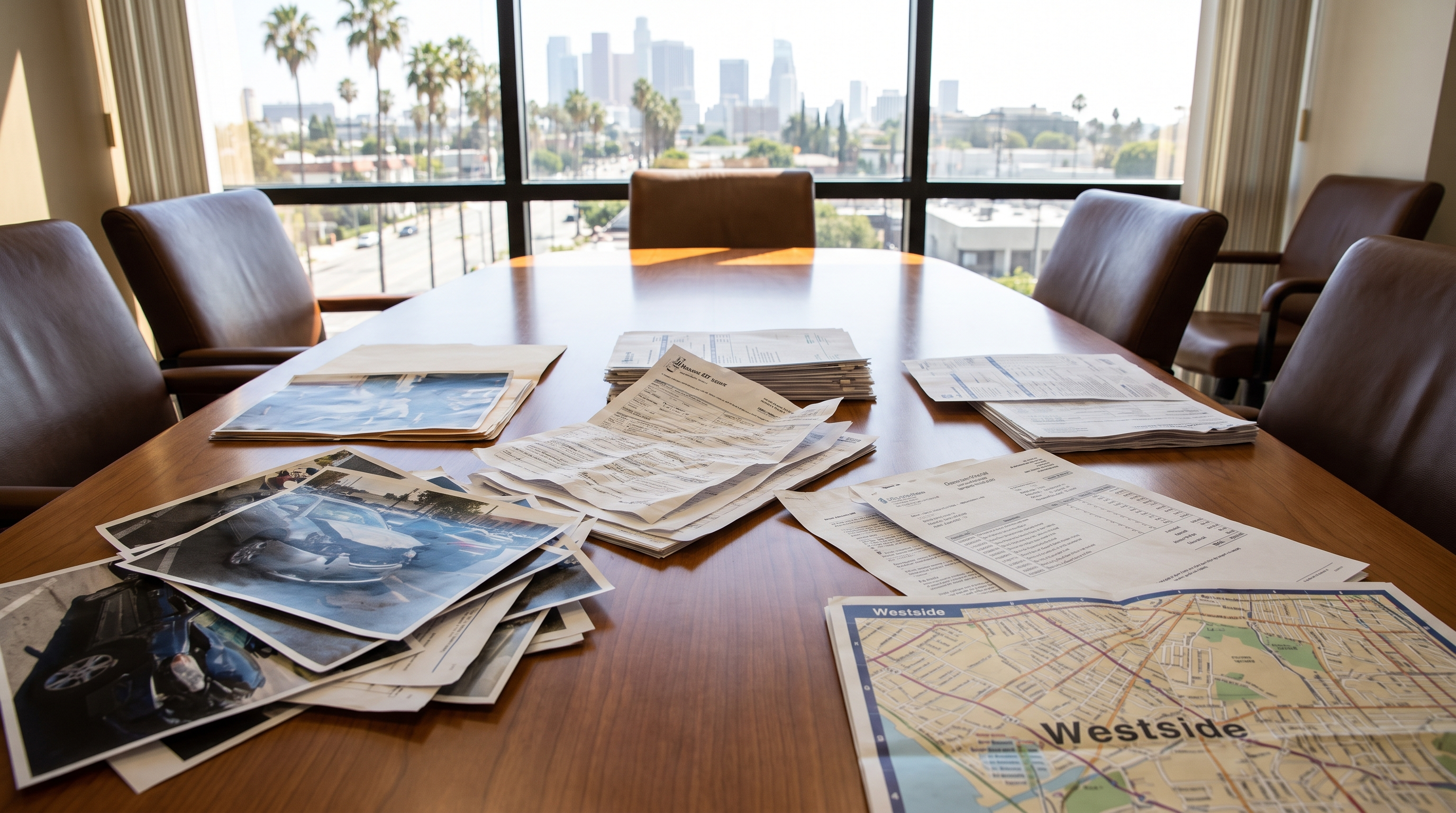
Car accident lawyers on the Westside usually start with evidence and insurance because those two pieces shape the claim before negotiations begin. If the crash happened near Wilshire Boulevard, Brentwood, Westwood, Santa Monica, Culver City, or Century City, fast documentation can matter as much as the first phone call with the adjuster.
| Issue | Specific rule or data point | Why it matters |
|---|---|---|
| Insurance minimums | California DMV lists $30,000 per one injured person, $60,000 for more than one injured person, and $15,000 for property damage. | Minimum coverage can be too low for serious treatment, lost work, or multi-person crashes. |
| Filing deadline | California Code of Civil Procedure section 335.1 says many injury or wrongful-death actions must be filed within two years. | Evidence should be gathered early even though the lawsuit deadline may be later. |
| Coverage proof | California DMV says insurance is required for vehicles operated or parked on California roads. | Coverage checks should start before negotiations depend on assumptions. |
| Medical lien review | Provider liens, health plan liens, and reimbursement claims can affect the net recovery. | A settlement number is incomplete until liens and repayment claims are reviewed. |
Sources
- California DMV insurance requirements: https://www.dmv.ca.gov/portal/vehicle-registration/insurance-requirements/
- California Code of Civil Procedure section 335.1: https://leginfo.legislature.ca.gov
- California Department of Insurance consumer contact page, listed by DMV for insurance company questions: https://www.insurance.ca.gov/
What should you do before talking to the adjuster?
You should get medical care, document the scene, keep every insurance letter, and avoid guessing about speed, pain, lane position, or fault. A recorded statement can lock in an early version before the police report, diagnosis, repair estimate, or witness list is complete.
Westside crashes often happen around dense corridors: Wilshire Boulevard, Santa Monica Boulevard, Olympic Boulevard, Sepulveda Boulevard, Bundy Drive, and streets feeding the 405. In that setting, photos of lane markings, traffic controls, vehicle damage, debris, lighting, rideshare trip records, and nearby business cameras can be more useful than a memory written down a week later.
How does a California car accident timeline work?
A California car accident timeline usually moves from emergency care to evidence preservation, insurance notice, treatment records, coverage review, demand evaluation, lien review, negotiation, and litigation if needed. The California two-year filing rule in Code of Civil Procedure section 335.1 is a deadline, not a reason to wait.
The early timeline matters because video can be overwritten, witnesses can move, and an adjuster can request a statement before you know whether symptoms are temporary or part of a longer treatment plan. If a public vehicle, public road condition, or government employee might be involved, additional deadlines may require faster review.
Who gets paid from a settlement?
The injured client does not know the net result until case costs, attorney fees, medical bills, provider liens, health plan reimbursement claims, and any repayment obligations are reviewed. A gross settlement number can look clear while the net number still needs accounting.
This is one reason a serious injury claim should not be evaluated by the first offer alone. The useful question is what the offer covers after medical documentation, lost income records, coverage limits, liability evidence, and liens are checked. No article can predict that result for a specific case.
What makes Westside evidence different?
Westside evidence can involve office buildings, medical centers, hotels, restaurants, parking garages, delivery vehicles, rideshare trips, and commuter traffic. A crash near 12100 Wilshire Boulevard may need different preservation requests than a crash on a residential side street.
That local setting changes the first evidence letter. A lawyer may need to contact businesses about video, identify property managers, request repair records, check rideshare data, or document a traffic-control problem before routine insurance paperwork tells only part of the story.
Frequently Asked Questions
Is it worth suing for personal injury?
It can be worth pursuing a personal injury claim when medical treatment, lost income, pain, disability, fault disputes, or low insurance offers create a real gap between the harm and the carrier's position. Filing a lawsuit is one tool, not the first step in every case.
Many cases start with evidence and insurance review before anyone files. The decision should turn on liability, damages, coverage, deadlines, liens, and the client's goals.
What is personal injury law like after a car accident?
Personal injury law after a car accident focuses on conduct, causation, injury proof, insurance coverage, and damages. In practice, the file is built from records: photos, reports, medical notes, bills, repair documents, witness names, and insurance communications.
The legal theory matters, but the records do the work. A Westside crash with strong video, clear treatment records, and confirmed coverage is different from one built on competing driver memories.
Who pays in a personal injury lawsuit?
Payment usually depends on the at-fault party's insurance, any additional coverage, and the facts that connect the injury to the crash. California DMV's minimum coverage figures show why coverage checks matter early: minimum limits may not match the size of a serious injury claim.
Some cases also involve employer coverage, rideshare coverage, commercial policies, uninsured motorist coverage, or underinsured motorist coverage. The exact source should be verified before settlement talks settle into a number.
How much of a settlement will I get?
Your net amount depends on the gross settlement, attorney fees, case costs, medical bills, liens, reimbursements, and negotiated reductions. No lawyer should promise a net number before reviewing the documents.
Ask for a settlement disbursement estimate before signing a release. That estimate should show the proposed payment path in writing so the decision is based on more than the headline number.
CTA, disclaimer, and next step
Lederer & Nojima LLP reviews car accident claims from its Westside office at 12100 Wilshire Boulevard, Suite 480. Call (310) 312-1860 or use the contact page if you need help checking evidence, insurance, deadlines, or lien issues after a crash.
Results may vary. Contact our office for a case evaluation.
This article is for informational purposes only and does not constitute legal advice.