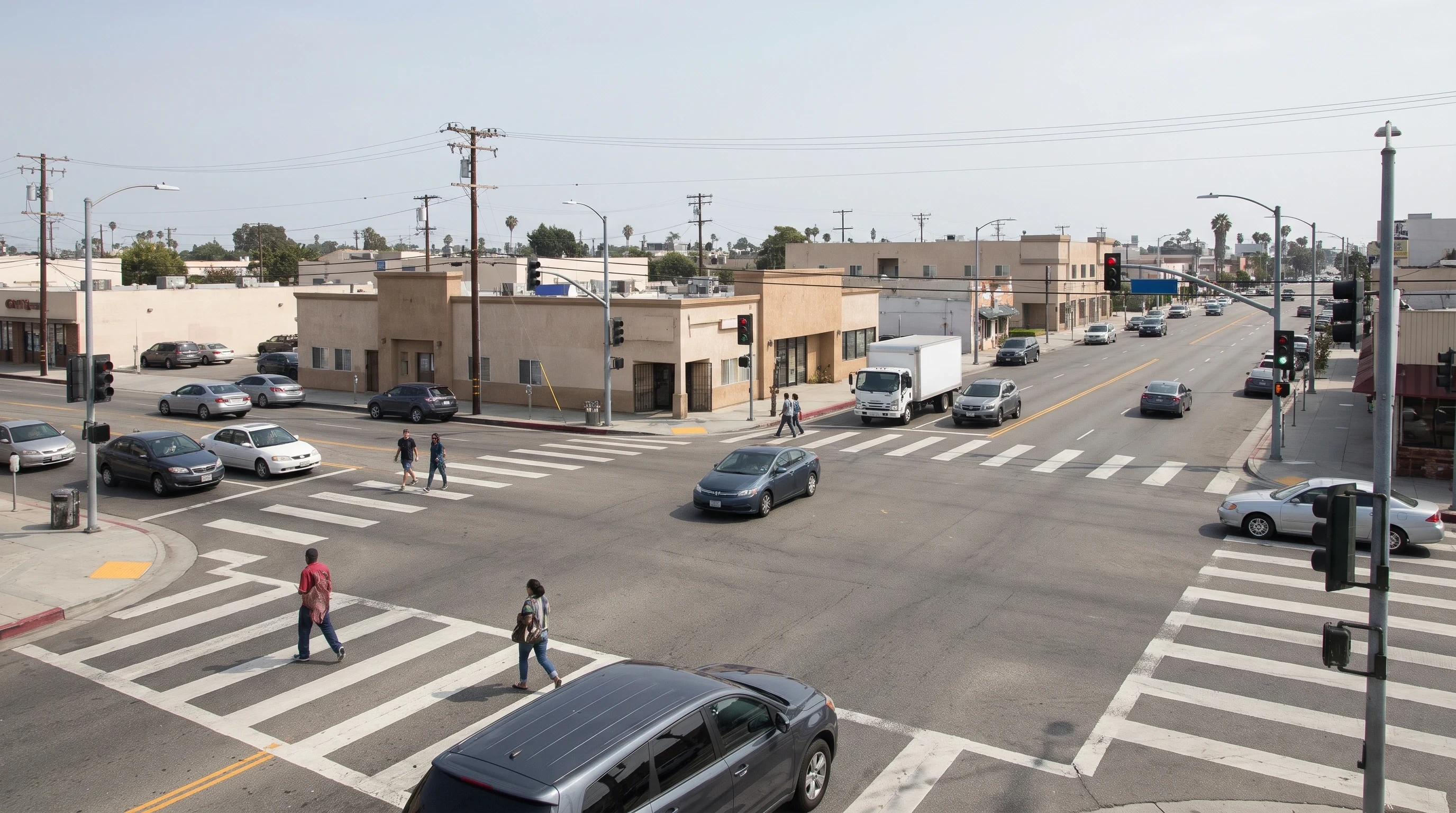
Car accident lawyer Hawthorne: what the crash data shows
Car accident lawyer Hawthorne searches often follow a collision, but citywide crash totals cannot establish fault in an individual claim. California Highway Patrol's California Crash Reporting System recorded 826 Hawthorne crashes in 2025, with 416 people injured and 3 people killed, in the extract queried November 23, 2026.
| Hawthorne measure | CCRS count for 2025 | What the count describes |
|---|---|---|
| Reported crashes | 826 | Collisions in the city extract |
| People injured | 416 | Injured people, not injury crashes |
| People killed | 3 | Fatalities, not fatal crashes |
| Rear end crashes | 257 | Collisions classified by type |
| Side swipe crashes | 195 | Collisions classified by type |
Source: California Highway Patrol, CCRS via data.ca.gov, city name Hawthorne, calendar year 2025, queried November 23, 2026. Counts of people and counts of crashes use different units. Do not divide them and call the result your chance of injury.
Sources
- California Highway Patrol, California Crash Reporting System (CCRS) via data.ca.gov
- California Legislative Information, Cal. Veh. Code § 16000 (current text) (published at leginfo.legislature.ca.gov)
- California Legislative Information, Cal. Veh. Code § 20008 (current text) (published at leginfo.legislature.ca.gov)
What do the Hawthorne totals tell an injured driver?
They give citywide context. They say nothing about what happened at your intersection, whether another driver caused your injury or what an insurer should pay.
A rear end classification describes the collision type. To understand a particular crash, an attorney still needs the accounts of those involved and the available physical evidence.
CHP's 2025 CCRS Hawthorne extract records 154 people injured in 257 rear-end crashes. For an injured Hawthorne driver, that means the category should not be dismissed as harmless, but it does not prove your injury or fault. Preserve evidence of braking, the impact sequence and medical findings.
The same CHP extract records 51 people injured in 195 side-swipe crashes, a ratio of about 26%. That is an injured-person-to-crash ratio, not proof that 26% of crashes involved injuries or your personal injury probability. A side-swipe label does not resolve an injury dispute. Preserve lane-position evidence, contact-point photographs and medical records so an attorney can evaluate how the collision occurred and whether the medical evidence supports the claimed injuries.
Which records belong in your accident file?
Keep your collision report information, scene photographs and medical records together. Save the original files, including any video, rather than relying on a screenshot or a message that compresses the recording.
Can the firm handle a claim beyond the insurance stage?
David Lederer explains that Lederer & Nojima handles vehicle accident matters from inception through trial, including car, commercial trucking and rideshare cases. Ask the office how that approach applies to your circumstances and who would handle the next stage.
Frequently Asked Questions
What should I do immediately after a car accident?
In Hawthorne, prioritize safety and seek emergency assistance when needed. Obtain appropriate medical care and preserve the available collision information without placing yourself in danger.
Should I call insurance immediately after an accident?
After a Hawthorne accident, review the notice requirements in your policy and ask about the reporting process. A policy notice obligation differs from a request to give another insurer a detailed recorded account.
Does the city crash total prove another driver caused my injuries?
No. An attorney must review the facts of your collision and the medical evidence connecting the event to the injuries you claim.
Does an injury count mean the same thing as an injury crash count?
No. The CCRS figures above count injured people and reported crashes in separate fields; a collision can involve more than a single person.
How should you read the figures without overstating them?
Start with the geographic filter. The data describes Hawthorne as a city and does not rank intersections. A citywide extract does not support a claim that a particular stretch of Hawthorne Boulevard causes the most crashes. Ask for a location-specific analysis before using the totals to describe a road as the most dangerous.
Keep the calendar year beside the number. A search performed in a later year does not turn a prior year's collision count into current-year data. The query date states when the extract supplied these figures, and the collisions occurred in the year the table names.
Take care with the distinction between a person and a crash. A report can describe a collision involving several occupants. An injury total counts the people in the relevant field, while the collision total counts events. Treating the injury count as the number of collisions involving an injury would change what the source says.
The same caution applies to fatalities. The CCRS extract reports people killed. It does not establish an equal number of fatal collisions, and it does not support an estimate of the value of a wrongful death claim. A family needs advice based on its circumstances rather than an inference from a citywide table.
Rear end and side swipe classifications describe different collision types in the dataset. They do not identify a particular driver's conduct. A photograph of vehicle damage might support an account of contact, but an attorney should consider it alongside the surrounding sequence. Avoid treating a category label as a legal conclusion.
Local details belong in the case file when they relate to the collision. If your accident occurred near El Segundo Boulevard or on Hawthorne Boulevard, record the actual location and direction of travel. Do not substitute a familiar landmark for an intersection you cannot recall. Tell your attorney which details you remember and which remain uncertain.
Describe the sequence in your own words while you remember it. Keep your account separate from what a witness told you later. If another person supplied information about a light or a lane change, identify that person as the source. This gives the attorney a way to distinguish your observations from information that needs further checking.
Medical records serve a different purpose from scene photographs. Tell the treating professional what you experienced and follow the professional's instructions. If symptoms change, seek appropriate care rather than treating an online description as a diagnosis. An attorney cannot determine a medical condition from the city crash statistics.
Keep correspondence in its original form. If an insurer asks for documents, save the request and your response. If you receive a release, ask an attorney to explain what the document covers before you sign. The wording of a particular document matters more than a general account of how claims tend to proceed.
Reporting duties also need individual attention. California Legislative Information publishes the current Vehicle Code provisions governing accident reports, including the sections linked in Sources. An attorney can review which duties apply to your collision. Do not assume that a conversation with an insurer completes a separate reporting obligation.
For a consultation, bring the information you already have and identify what remains missing. You do not need to replace a missing report with an estimate or reconstruct a conversation as an exact quotation. Tell the office how you obtained each document and whether someone else holds the original recording.
David Lederer also explains that the firm represents injured pedestrians, and that its Westside office location does not limit that work. This applies if a collision involves a person walking rather than another vehicle. Ask about the actual event and the type of representation you need.
Read about the firm's car accident representation and attorneys, or contact the office to discuss a case evaluation. Results may vary. Contact our office for a case evaluation.
This article is for informational purposes only and does not constitute legal advice.